In the ever-evolving world of creativity, few experiences rival the electricity of live collaboration. Whether it’s musicians improvising together, actors feeding off each other’s energy, or speakers co-creating a narrative in front of an audience, something extraordinary happens when creative minds share a moment in real time. It’s more than just performance — it’s a spontaneous dialogue between people, ideas, and emotions.
This is the essence of collaboration on stage — a space where barriers dissolve, ideas fuse, and magic unfolds in ways no rehearsal or solo effort can replicate. But what makes sharing live moments so uniquely powerful? Why does the creative process often reach its highest peaks when it happens in front of others, in the heat of the moment?
Let’s explore how and why collaboration on stage sparks creative breakthroughs that extend far beyond the spotlight.
The Energy of Shared Presence
When creative people come together in a live setting, something remarkable happens: the energy multiplies. Every participant — whether performer, collaborator, or audience member — contributes to an invisible current that fuels creativity.
Unlike digital collaboration or solo work, live performance thrives on presence. There’s no pause button, no backspace key. Every action, every note, every line spoken carries weight and immediacy. This heightened awareness pulls collaborators into a state of flow — a psychological zone where creativity, intuition, and focus peak simultaneously.
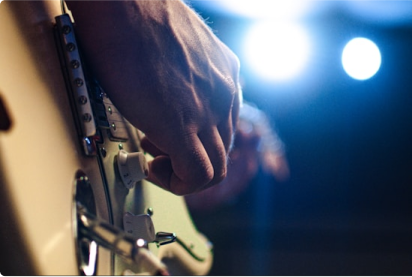
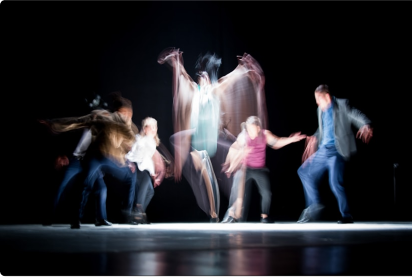
In this shared space, one performer’s spark can ignite another’s. A guitarist’s unexpected riff inspires the vocalist to change the melody. A dancer’s subtle movement shifts the rhythm of the music. The creative process becomes a conversation of instincts, and that synergy often leads to discoveries that wouldn’t have surfaced in isolation.
Improvisation: The Art of the Unexpected
Live collaboration thrives on improvisation — the art of responding to the unknown. When artists share a stage, they surrender control in favor of trust and curiosity. They don’t know exactly what will happen, and that uncertainty is what makes the experience thrilling and creatively fertile.
Improvisation forces artists to listen deeply — not just to sound or words, but to emotion and intent. It demands adaptability, empathy, and a willingness to build on each other’s ideas.
Think of legendary jazz ensembles: Miles Davis, John Coltrane, or Herbie Hancock. Their groundbreaking work didn’t come from rigid structure but from trusting the process of co-creation. Each musician played not for themselves, but with the others — weaving melodies, harmonies, and rhythms into spontaneous masterpieces.
In this context, collaboration becomes more than just teamwork; it becomes mutual discovery. Improvisation unlocks creativity because it removes the fear of failure and replaces it with the excitement of exploration.
Emotional Contagion and Audience Connection
Another reason live collaboration is so transformative lies in the feedback loop between performers and audience. Emotions are contagious — and nowhere is that more evident than on stage.
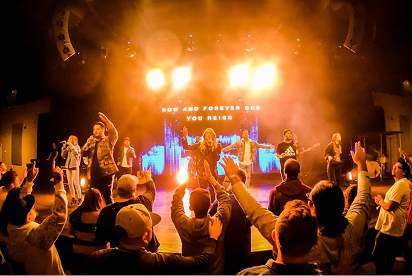
When performers are truly connected, the audience feels it. The laughter, applause, gasps, or even silent awe bounce back, reinforcing the energy on stage. This emotional exchange amplifies creativity in real time. Artists sense the crowd’s reaction and instinctively adjust — they take risks, push boundaries, and reveal more of themselves.
In essence, every live collaboration is a three-way dialogue between performer, collaborator, and audience. The audience doesn’t just watch creativity happen — they participate in it. And this shared emotional landscape often leads to moments of genuine artistic transformation.
Collaboration Builds Trust — and Trust Fuels Risk-Taking
Creativity flourishes when people feel safe enough to take risks. On stage, this trust must be instantaneous. There’s no time to debate or doubt — only to respond, support, and create.
When collaborators trust each other deeply, they dare to go off-script, to explore new interpretations, to challenge norms. They understand that even if something doesn’t go as planned, the others will catch them — figuratively and sometimes literally.
That level of trust is the foundation of creative vulnerability. It allows performers to drop their guard, to stop performing for each other and start performing with each other. And that’s where the breakthroughs happen — in those raw, authentic exchanges where fear gives way to freedom.
The Alchemy of Diversity
Collaboration on stage often brings together people from different backgrounds, disciplines, and styles. This diversity is not a challenge — it’s the secret ingredient.
When a painter works with a musician, or a poet with a dancer, each participant brings a unique creative vocabulary. These contrasting languages force everyone to step outside their comfort zones and think differently.
In this way, collaboration becomes a laboratory of cross-pollination — where new genres, hybrid art forms, and groundbreaking ideas are born. Consider how theater evolved when it fused with multimedia, or how modern music draws from global influences to create entirely new sounds.
When diverse artists collaborate live, the stage becomes a melting pot of perspectives, sparking unexpected creative chemistry that reshapes what art can be.